Commercial waste holding tanks serve as the critical containment barrier when municipal sewer connections are unavailable at temporary worksites and coastal event venues. Standard portable toilets provide standalone…
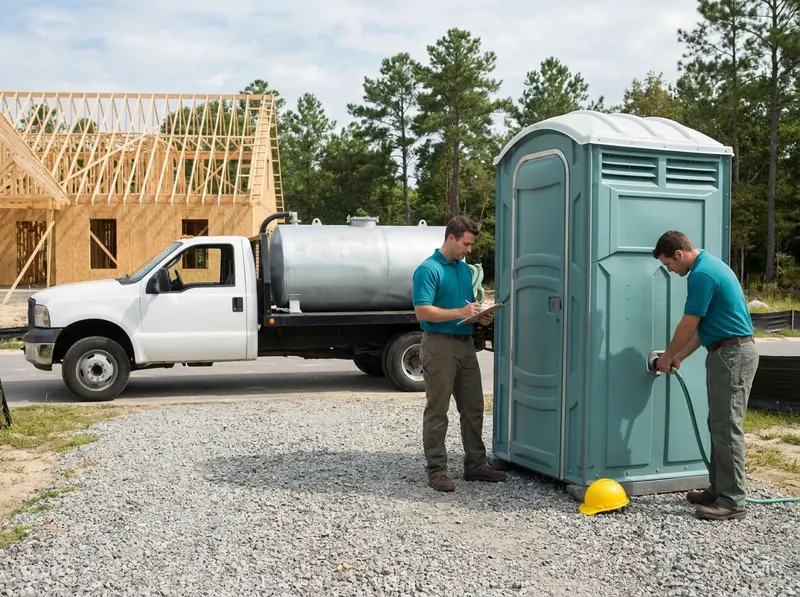
Commercial waste holding tanks serve as the critical containment barrier when municipal sewer connections are unavailable at temporary worksites and coastal event venues. Standard portable toilets provide standalone containment, but extended commercial operations—such as multi-week construction management trailers in Mayfaire or multi-day festival command centers along the Wilmington Riverwalk—require plumbed bulk storage. Low-profile tanks slide directly beneath mobile office skids and restroom trailers, preserving foot traffic paths while capturing hundreds of gallons of wastewater out of public sight. The primary operational trade-off involves active monitoring; unlike self-contained single units that move when full, holding tanks remain static and require scheduled vacuum extraction to prevent overflow.
Operating temporary bulk waste containment in New Hanover County requires strict management of high water tables and sandy coastal soils. Placements near tidal corridors like Masonboro and Riverlights demand secured, level positioning so ground moisture does not shift heavy containment units once filled. In busy urban zones like Historic Downtown Wilmington and tight residential developments near Sunset Park or Pine Valley, tanks must be positioned within 30 feet of solid paved access so pump service trucks can connect vacuum hoses without blocking thoroughfares. Direct routing along corridors like Market Street and College Road allows service technicians to execute quiet, scheduled pump-outs before peak operating hours, keeping high-volume sites sanitary and odor-free.
Every job gets a firm, written price after a free on-site visit.
Tell us about your commercial waste holding tanks job in Wilmington and we'll send a clear, written quote — usually the same day.
 Festival Porta Potty Pros